

What is bloodstain pattern analysis?
Bloodstain pattern analysis (BPA) is the forensic discipline that involves studying the physical characteristics of bloodstains—such as their distribution, size, shape, and orientation—found at crime scenes or on related items (objects, weapons, clothing, etc.).
As a reconstruction science based on the fundamental principles of fluid mechanics, bloodstain pattern analysis allows for the interpretation of bloodletting mechanisms associated with criminal activity.
The conclusions drawn from bloodstain pattern analysis are formulated as hypotheses regarding the sequence of events. These hypotheses are then contextualized in relation to the available investigative elements, whether technical (forensic pathology findings, DNA analysis results, etc.) or derived from interviews and interrogations of the various parties involved (assessment of the degree of consistency between the statements).
BPA expertise provides judicial authorities with a detailed examination of the sequence of blood-related events, integrated within the context of the initial investigation or the judicial inquiry.
The various types of bloodstain patterns
The numerous bloodletting mechanisms observed at a crime scene can be grouped into four main categories, each providing essential information about the circumstances surrounding the events that produced them.

Definition : Passive patterns result from the sole effect of gravity on the blood source from which they originate.
Pattern examples : Drip, flow, drip trail, pool...
Information provided : Information about the positions and/or movements of persons or objects covered in blood/bleeding.

Definition : Active patterns are generated by the application of an external force and therefore involve a transfer of energy to the source of liquid blood at their origin.
Examples : Spatters, impact pattern, cast-off pattern, spurt...
Information provided : Location of areas of bloody violence, behaviour of specific injuries, estimation of postures, etc.

Definition : Transfer patterns result from pressure or friction of blood-stained items against surfaces.
Examples : Contact, wipe, swipe......
Information provided : Contact or friction with objects or body parts contaminated with blood, handling of objects or weapons by a person covered in blood, identification of the nature of the source, etc.
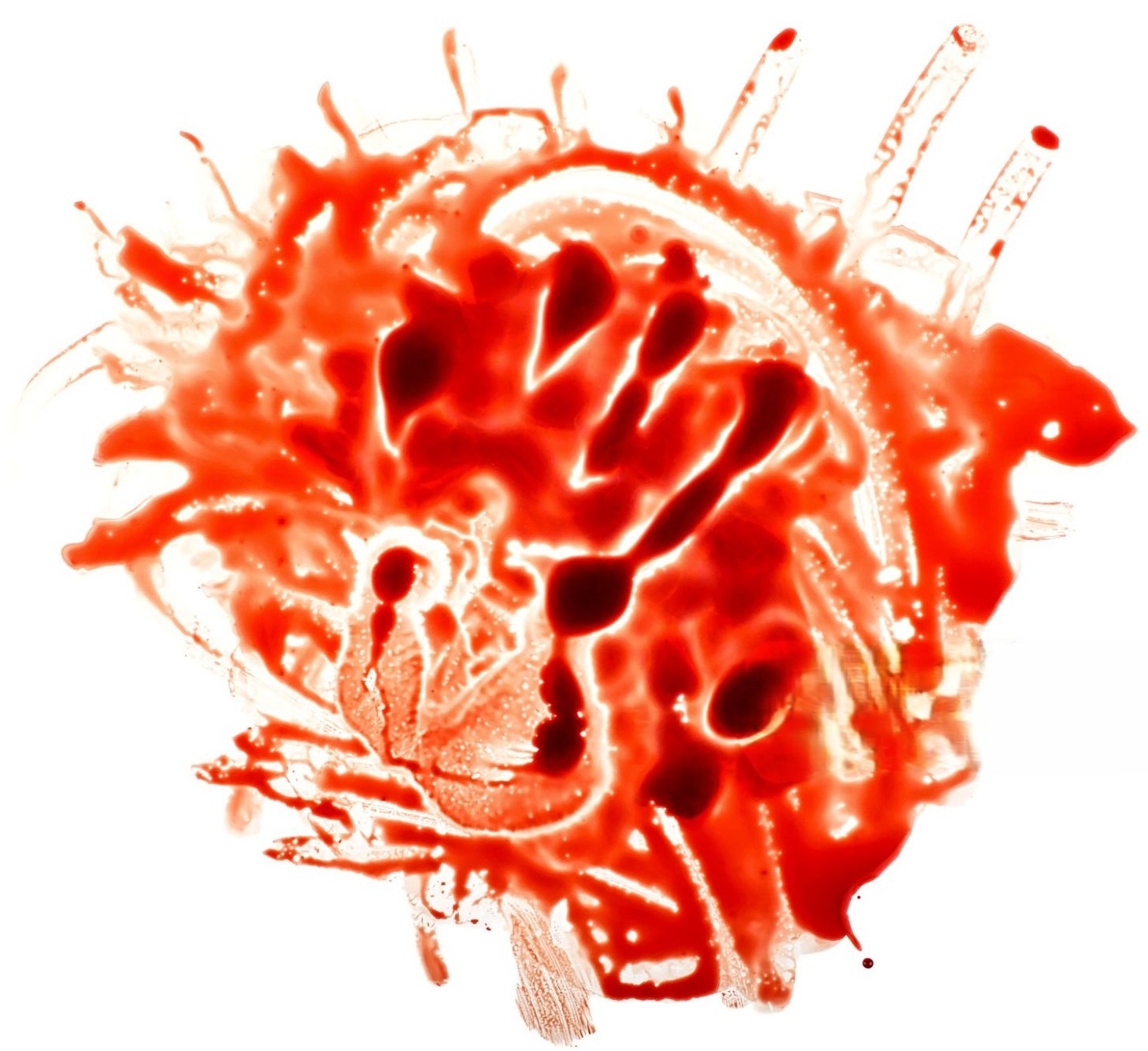
Definition : Altered patterns are characterised by changes in the morphology of bloodstains, influenced by the properties of the surface on which they are deposited (porosity, roughness, etc.), by physiological factors related to the behaviour of blood (coagulation, etc.) or by external actions (weather, cleaning, etc.).
Examples : Saturation stain...
Information provided : Modification to the crime scene, cleaning actions, activity of insects...
Methodology and contribution to investigations
Determination of bloody events
Identify each event that caused bloodstains (blows, use of a firearm, pressure/friction, movement, etc.)
Formulation of hypotheses
Detail the circumstances surrounding the bloody events (positions of the protagonists, conditions under which the traces were created, etc.)
Individualisation of bloodstain patterns
Locate the most relevant sampling areas and identify the person or persons responsible for the blood traces
Support for the investigation
Direct investigations and compare the statements of those involved with the bloody events (assessing the degree of compatibility, etc.)
Technical support
Understanding expert conclusions through immersive 3-D environments

Missions and results
BIOLEX forensic laboratory
By requesting expert opinions from BIOLEX,
the court ensures the assistance of a recognized partner for :
Its specialised expertise
Over 20 years' experience
in BPA and forensic science
its state-of-the-art equipment
Latest generation hardware and software for detection, 3D modeling, and virtualization of crime scenes
its validated methods
Analyses carried out in accordance with current international protocols
Contact us
We remain at your disposal should you require any further information or expertise.